
Industry Articles — iDig North America

Resources

Industry Articles

Expert insights on machine control, GNSS technology, excavation innovation, and the business of construction equipment — from the iDig North America team.

Subscribe to Newsletter

hidden-label

Get expert insights on machine control, GNSS, and construction technology.

NEWS FOR THE WEEK
View All Articles →
The New iDig North America: Built Around Dealer Success
★ Featured This Week
Dealer Insights

The New iDig North America: Built Around Dealer Success

When an established equipment dealer agrees to represent iDig, that dealer is making a real investment. They are putting their name and reputation behind our products. They are committing salespeople, technicians, management time, customer relationships, facilities, marketing resources and working capital to developing the iDig business.

September 2, 2026 · Dealer Insights

Latest Articles & Blogs

Featured
3D Machine Control vs. 2D: Choosing the Right System for Your Fleet
Machine Control

3D Machine Control vs. 2D: Choosing the Right System for Your Fleet

June 2026 · 8 min read

2D and 3D machine control can both improve excavation productivity, but they solve different problems. 2D provides straightforward depth, slope, and grade guidance for everyday excavation, while 3D adds GNSS positioning and digital project models for complete site awareness. Understanding the differences can help contractors choose the right technology for each machine, project, and stage of fleet growth.

View This Article


Introduction to Machine Control for New Operators
Education

Introduction to Machine Control for New Operators

May 2026 · 5 min read

The operator still needs to understand the machine, the material, the desired grade and how to excavate efficiently. Machine control simply gives the operator better information inside the cab, allowing many measurements that were traditionally performed manually to be viewed while the machine is working.

View This Article
Understanding GNSS Accuracy: RTK vs. SBAS for Construction
GNSS / GPS

Understanding GNSS Accuracy: RTK vs. SBAS for Construction

July 2026 · 7 min read

Understand the difference between RTK and SBAS GNSS correction technologies and why accuracy matters in construction. Learn how each method works, the level of positioning accuracy you can expect, and where RTK delivers the precision required for grading, excavation, layout, and machine control applications.

View This Article
Excavation Technology Trends Shaping North American Construction
Excavation Tech

Excavation Technology Trends Shaping North American Construction

May 2026 · 6 min read

Excavation is entering a new era as machine control, GNSS positioning, digital jobsite models, connected equipment, and more accessible technology change how contractors approach earthmoving. Across North America, these technologies are moving beyond large infrastructure projects and becoming practical productivity tools for contractors of all sizes.

View This Article
GNSS Signal Interference: Causes and Solutions for Construction Sites
GNSS / GPS

GNSS Signal Interference: Causes and Solutions for Construction Sites

March 2026 · 5 min read

GNSS technology gives construction teams highly accurate positioning for machine control, surveying, layout, and site operations, but the quality of that positioning depends on the receiver maintaining reliable satellite signals and correction data. Buildings, trees, terrain, electrical equipment, radio interference, poor satellite visibility, and even the placement of GNSS components can affect performance. Understanding the most common causes of GNSS interference—and how to identify and correct them—can help contractors maintain reliable positioning and avoid unnecessary downtime on the jobsite. Body

View This Article
How 2D Machine Control Reduces Grade Errors on Excavation Projects
Machine Control

How 2D Machine Control Reduces Grade Errors on Excavation Projects

August 2026 · 5 min read

Grade errors can quickly turn into over-excavation, additional material, unnecessary machine time, repeated grade checks, and costly rework. 2D machine control gives operators real-time depth, slope, and elevation guidance directly inside the cab, helping them understand where the bucket is relative to the target grade while they work. By providing continuous grade information, contractors can excavate more consistently, reduce dependence on manual checking, and reach finished grade with fewer corrections.

View This Article
Dealer Spotlight: Growing a Machine Control Business in 2026
Dealer Insights

Dealer Spotlight: Growing a Machine Control Business in 2026

June 2026 · 6 min read

Growing a successful machine control business in 2026 requires more than simply adding technology to a dealer’s product lineup. Contractors increasingly expect knowledgeable sales support, practical demonstrations, installation guidance, operator training, responsive technical support, and a dealer that understands how machine control fits into the way they actually work. For equipment dealers, machine control represents an opportunity to build a specialized, recurring technology business while strengthening long-term relationships with contractors.

View This Article
How to Evaluate a Machine Control Dealer: A Contractor's Guide
Dealer Insights

How to Evaluate a Machine Control Dealer: A Contractor's Guide

April 2026 · 4 min read

Choosing the right machine control dealer can be just as important as choosing the right system. Contractors should evaluate more than price—looking closely at product knowledge, installation capabilities, training, technical support, response time, parts availability, and the dealer’s ability to support the technology long after the initial sale.

View This Article
The Rise of Wireless Machine Control: Why Bluetooth Matters
Machine Control

The Rise of Wireless Machine Control: Why Bluetooth Matters

July 2026 · 4 min read

Wireless machine control is changing how contractors install, move, and use guidance technology across their equipment fleets. By replacing many traditional wired connections with Bluetooth communication, modern systems can reduce installation complexity, eliminate vulnerable cables, make components easier to transfer between compatible machines, and simplify everyday operation. For contractors, wireless technology is not just about removing wires—it can make machine control more practical, portable, and easier to deploy across the jobsite.

View This Article
Solar-Powered Machine Control Sensors: How the iDig System Works
Machine Control

Solar-Powered Machine Control Sensors: How the iDig System Works

2026-09-11 · 5 min read

Solar-powered machine control sensors help simplify how guidance technology operates on construction equipment by reducing dependence on hardwired power connections and frequent battery replacement. In the iDig system, compact solar-powered sensors mounted on the machine continuously measure the position and movement of the boom, stick, and bucket, then communicate that information wirelessly to the in-cab display. The result is a practical, self-contained machine control architecture designed to provide operators with real-time depth, slope, and grade information while minimizing installation complexity, exposed wiring, and day-to-day maintenance.

View This Article
How Much Does Machine Control Cost? What Contractors Should Consider
Machine Control

How Much Does Machine Control Cost? What Contractors Should Consider

2026-09-11 · 5 min read

Machine control can represent a significant investment, but the purchase price alone does not determine whether a system is expensive or cost-effective. Contractors should evaluate the complete cost of ownership, including hardware, installation, GNSS or correction services, training, support, machine compatibility, and ongoing operating expenses. Just as importantly, they should consider the potential return from increased productivity, improved grade accuracy, reduced rework, fewer manual grade checks, better material control, and the ability to use the technology across multiple machines. The right question is not simply, “How much does machine control cost?” but rather, “What will this system cost to own, and what value can it produce for my operation?”

View This Article
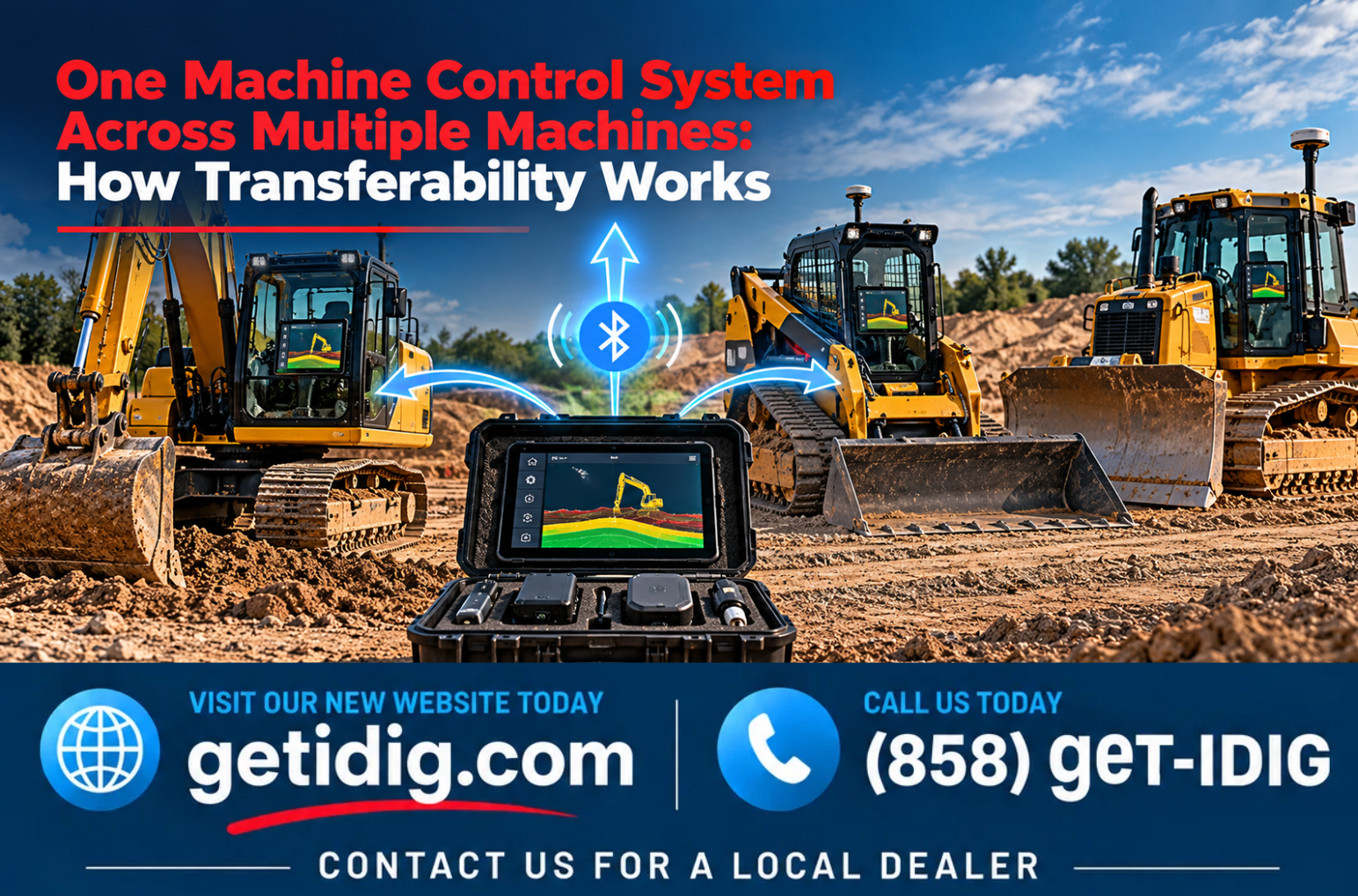
One Machine Control System Across Multiple Machines: How Transferability Works
Machine Control

One Machine Control System Across Multiple Machines: How Transferability Works

2026-09-11 · 5 min read

Machine control does not always have to be permanently tied to a single piece of equipment. Transferable systems allow contractors to move key machine-control components between compatible machines, helping increase utilization and extend the value of a technology investment across the fleet. By preparing multiple machines with the appropriate mounts, measurements, and configurations, contractors can deploy one system where it is needed most—whether that means moving between excavators or using compatible technology across different machine types.

View This Article
Skid Steer Grade Control: What It Is and How It Works
Machine Control

Skid Steer Grade Control: What It Is and How It Works

2026-09-11 · 5 min read

Skid steer grade control brings machine-control technology to one of the most versatile machines on the construction site. By providing the operator with real-time information about bucket or blade position, elevation, slope, and target grade, the system can reduce repeated manual grade checks and help the operator cut or fill more accurately. For contractors using skid steers and compact track loaders for site preparation, grading, backfilling, building pads, drainage, landscaping, and finish work, grade control can transform the machine from primarily a material-moving tool into a more precise grading platform. The result can be fewer passes, less rework, better material control, reduced dependence on stakes and manual checking, and greater productivity from equipment contractors already own.

View This Article
Wireless vs. Wired Machine Control: What's the Difference?
Machine Control

Wireless vs. Wired Machine Control: What's the Difference?

2026-09-11 · 5 min read

Wireless and wired machine control systems are designed to accomplish the same basic goal: give equipment operators accurate, real-time guidance while they work. The major difference is how the system's components are powered, connected, installed, and maintained. Traditional wired systems rely on cables routed throughout the machine, while wireless systems use technologies such as Bluetooth and independently powered sensors to communicate without extensive machine wiring. For contractors, that difference can affect installation time, maintenance, system transferability, downtime, and how easily machine control can be deployed across an existing fleet.

View This Article
Building Stronger Partnerships: iDig & Hixon Mfg & Supply
Dealer Insights

Building Stronger Partnerships: iDig & Hixon Mfg & Supply

September 3, 2026 · 1 minute read

A big thank you to the Hixon Mfg & Supply team in Denver, Colorado, for hosting our new product training with the iDig sales and development team. We’re proud to have Hixon as a trusted Premier iDig Dealer and truly appreciate their commitment to iDig technology, training, and customer success. This training brought our teams together for hands-on product education, technical discussions, real-world applications, and a closer look at how the latest iDig machine control solutions can help contractors improve accuracy, productivity, and efficiency in the field. Investing time in product knowledge and training is an important part of ensuring customers receive the expertise, support, and service they expect when adopting new technology.

View This Article
The New iDig North America: Built Around Dealer Success
Dealer Insights

The New iDig North America: Built Around Dealer Success

September 2, 2026

When an established equipment dealer agrees to represent iDig, that dealer is making a real investment. They are putting their name and reputation behind our products. They are committing salespeople, technicians, management time, customer relationships, facilities, marketing resources and working capital to developing the iDig business.

View This Article
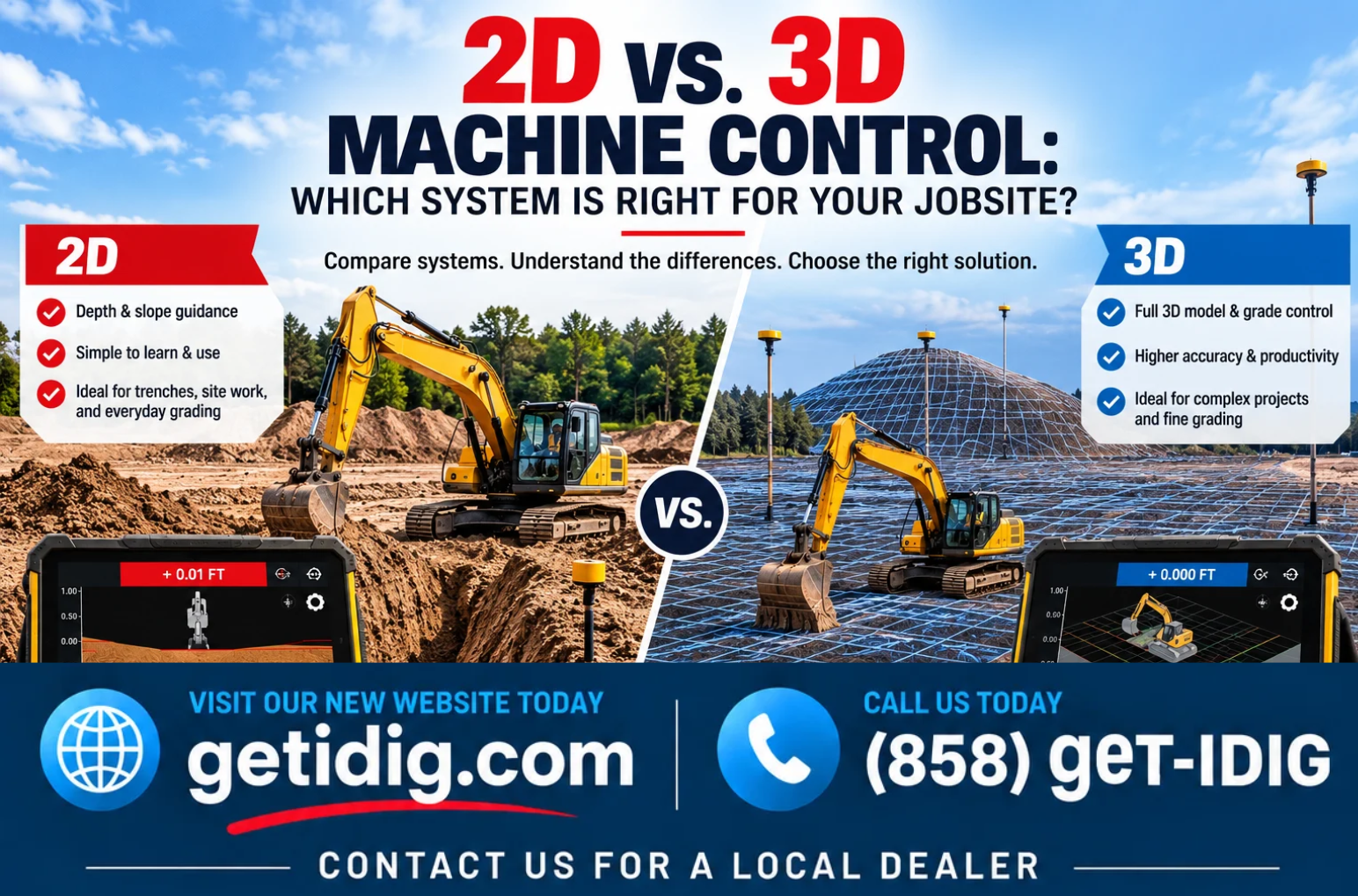
2D vs. 3D Machine Control: Which System Is Right for Your Jobsite?
Machine Control

2D vs. 3D Machine Control: Which System Is Right for Your Jobsite?

2026-09-02 · 7 min read

Choosing between 2D and 3D machine control is not simply a matter of deciding which technology is more advanced. The right system depends on the work a contractor performs, the accuracy required, project complexity, equipment utilization, and how machine control fits into the existing workflow. 2D machine control provides real-time depth and slope guidance for applications such as trenching, foundations, drainage, and everyday excavation, while 3D machine control adds GNSS positioning and digital project models for more complex grading and site-development work. Understanding where each system delivers value can help contractors invest in the technology they will actually use and build a machine-control strategy that can grow with their business.

View This Article
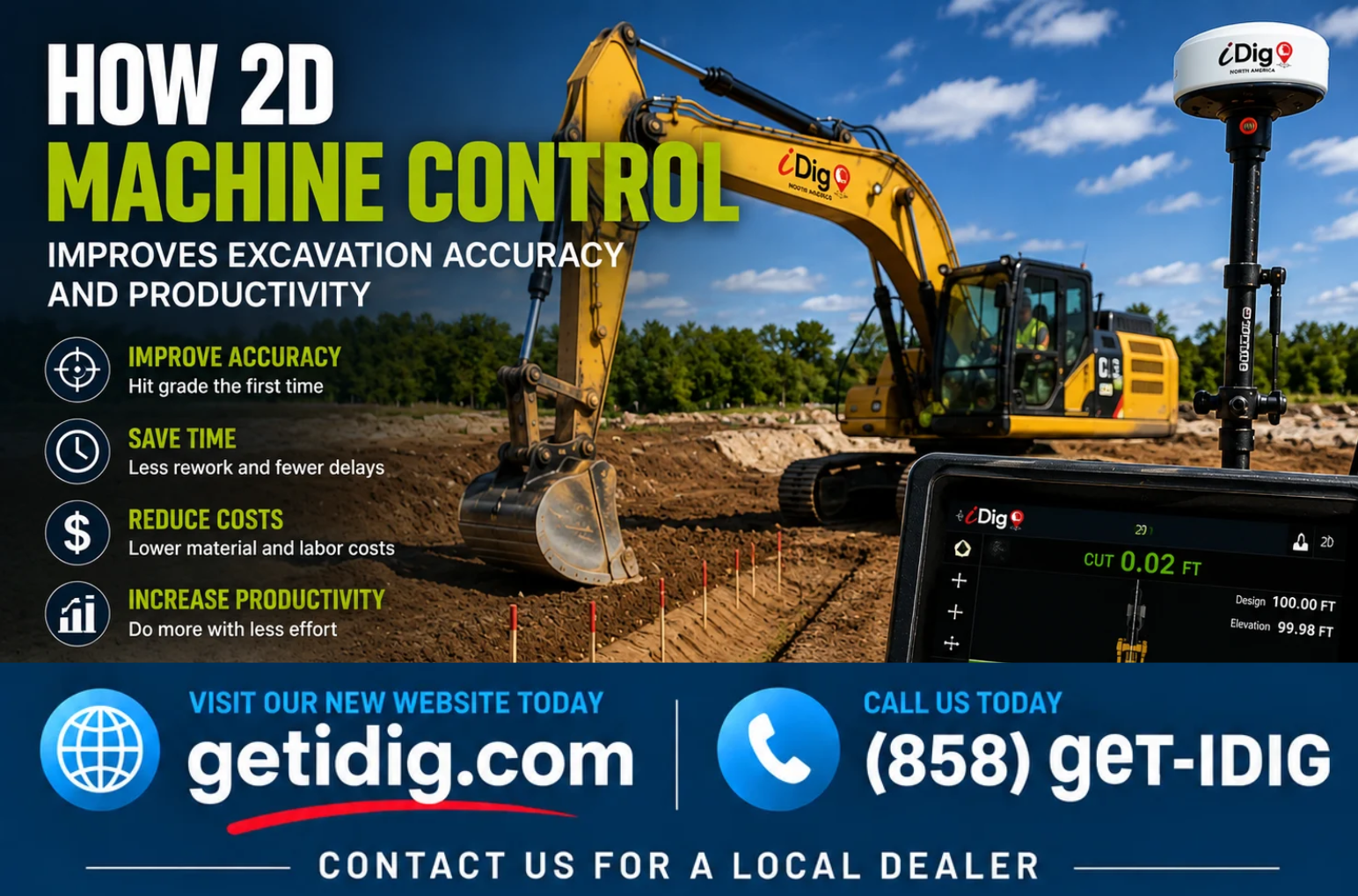
How 2D Machine Control Improves Excavation Accuracy and Productivity
2D Machine Control

How 2D Machine Control Improves Excavation Accuracy and Productivity

2026-09-02 · 6 min read

Learn how 2D excavator machine control helps contractors reach target grade faster, reduce costly rework, and improve overall jobsite productivity by providing operators with real-time depth, slope, and bucket-position guidance directly inside the cab. Instead of repeatedly stopping excavation to check grade manually, operators can continuously see where the bucket is in relation to the established target while they work. This can help reduce over-excavation and under-excavation, minimize unnecessary corrective passes, improve trench and slope consistency, and decrease the amount of time crews spend performing routine grade checks. By giving operators better information throughout the excavation process, 2D machine control can help contractors make more efficient use of machine hours, labor, fuel, and materials while getting more productivity from the equipment they already own.

View This Article
5 Ways Excavator Grade Control Reduces Rework on Construction Sites
Excavator Technology

5 Ways Excavator Grade Control Reduces Rework on Construction Sites

2026-09-02 · 5 min read

Rework is one of the most expensive and avoidable problems on an excavation project. Every time an excavator cuts too deep, stops short of grade, creates an incorrect slope, or has to return to previously completed work, contractors lose machine hours, labor, fuel, material, and valuable schedule time. Excavator grade control gives operators real-time depth, slope, and grade information inside the cab, helping them make more accurate decisions while they dig. By reducing overdig, improving trench accuracy, minimizing repeated grade checks, protecting project schedules, and controlling material and labor costs, grade control can help contractors complete work correctly the first time and get greater productivity from the equipment they already own.

View This Article
GNSS Machine Control for Construction: A Practical Guide for Contractors
GPS & GNSS

GNSS Machine Control for Construction: A Practical Guide for Contractors

2026-09-02 · 8 min read

GNSS machine control brings high-accuracy satellite positioning into construction equipment, allowing operators to understand exactly where the machine is working in relation to a digital project design. Unlike traditional grade checking that relies heavily on stakes, lasers, or repeated manual measurements, GNSS-based machine control continuously combines satellite positioning, correction data, machine geometry, and project information to provide real-time guidance. For contractors, the practical benefits can include more accurate excavation and grading, fewer grade checks, reduced over-excavation and rework, better material control, and increased productivity. Understanding how GNSS works—and what is required to achieve construction-grade accuracy—is essential before deciding where 3D machine control fits into a contractor's operation.

View This Article
iDig Wins Innovation and Safety Award at Libramont 2023
Dealer Insights

iDig Wins Innovation and Safety Award at Libramont 2023

October 16, 2023 · 2

iDig was honored with the Innovation and Safety Award at Libramont 2023, recognizing the company’s continued commitment to developing machine control technology that combines innovation, practical performance, and improved safety on the jobsite. The prestigious industry award recognizes the most innovative and safety-focused product of the year in Belgium and was presented during Libramont, one of Europe’s most important events for the agricultural, forestry, construction, and agri-food industries. As Europe’s largest outdoor trade show, Libramont brings together manufacturers, technology developers, equipment professionals, contractors, and industry leaders to showcase new products and advancements shaping the future of equipment and field operations. Receiving this recognition highlights iDig’s approach to making advanced machine control technology more accessible and practical for equipment operators while helping reduce unnecessary manual grade checking and improving efficiency around working machinery.

View This Article
2D or 3D Machine Control? Start With the Work, Not the Technology
Machine Control

2D or 3D Machine Control? Start With the Work, Not the Technology

September 1, 2026 · 5

Choosing between 2D and 3D machine control depends on the work your fleet performs, the accuracy and positioning capabilities you need, and how far you want to take digital construction. 2D provides practical depth and slope guidance for everyday excavation, while 3D combines GNSS positioning with digital project models for more complex jobs. Understanding the strengths of each can help contractors invest in the right technology without paying for capabilities they do not need.

View This Article